
Table of Contents
The Problem of Modernity:
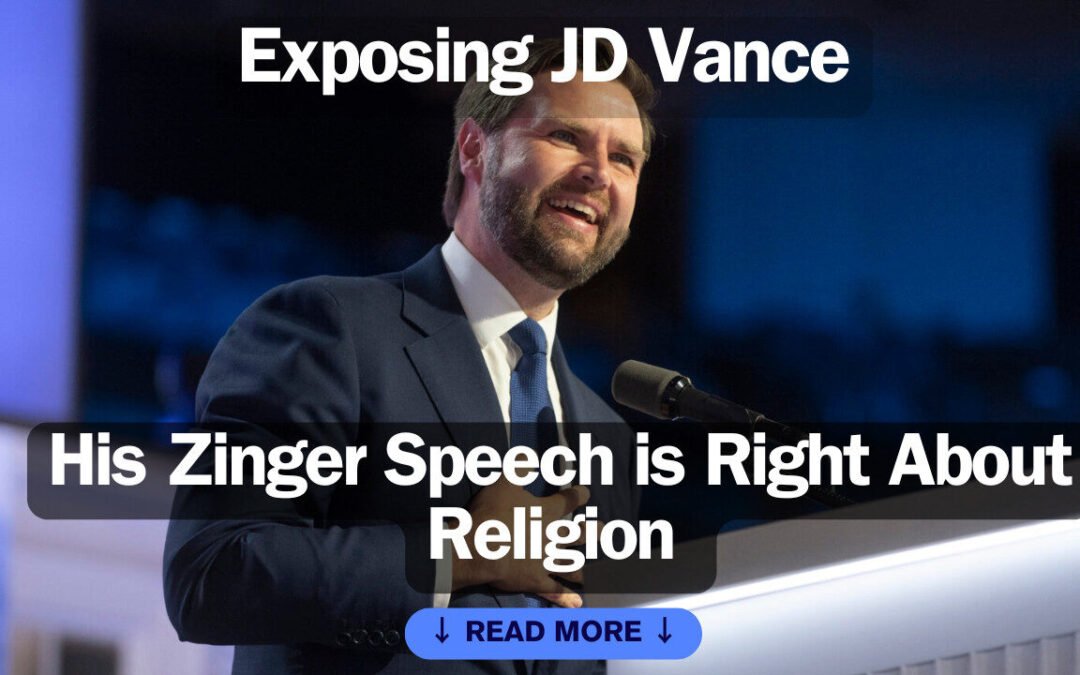
Modern society loves to pretend that religion belongs to the private realm. Yet this supposed “neutrality” in public life has never truly existed. Every law, institution, and cultural norm is shaped by an underlying vision of the good — a moral and even theological framework, whether explicit or not. As Senator JD Vance recently stated, “there is no such thing as pure neutrality.”
This truth, once obvious, has been obscured by a culture that treats faith as a therapeutic accessory rather than the foundation of human flourishing. The Catholic tradition, however, has always insisted that the truths of the Gospel have public significance — not only for private morality but for the ordering of society toward justice, truth, and ultimately God Himself.
Integralism and the Christian Order
The Catholic vision of integralism does not mean a theocracy or forced conversion. It means the integration of faith and reason, nature and grace, politics and divine law — recognizing that temporal society finds its proper orientation only when subordinated to man’s ultimate end: the vision of God.
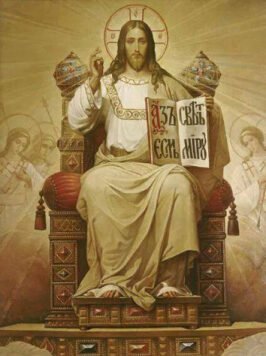
As St. Paul writes: “Do not be conformed to this world, but be transformed by the renewal of your mind” (Rom 12:2). Christ is not merely the Lord of hearts; He is the King of Kings. His reign extends over all creation — including the political, social, and cultural order. To separate faith from public life is to fragment the very structure of reality.
Pope Pius IX’s Syllabus of Errors (1864) condemned the modern notion that “the State, as the origin and source of all rights, enjoys a certain right of freedom from every religious influence.” The Church taught then, as now, that a society which denies God as its moral foundation ultimately denies the dignity of the human person made in His image.
Even the American Founders, though far from orthodox Catholicism, recognized that liberty itself depends on virtue and divine accountability. John Adams famously warned: “Our Constitution was made only for a moral and religious people. It is wholly inadequate to the government of any other.”
Against “Therapeutic Moral Deism”
Modern Christianity, especially in the West, has been infected by what sociologists call “therapeutic moral deism” — a feel-good spirituality that seeks comfort, not conversion. It preaches kindness without repentance, happiness without holiness, and spirituality without sacrifice.
This diluted faith strips Christianity of its supernatural core. The Catholic faith is not meant to make us comfortable within the world, but to sanctify us beyond it. True religion is not therapy for modern boredom but transformation of the soul by divine grace. A Church that seeks relevance by mirroring the world ends up losing both its power and its purpose.
A genuinely Catholic response must therefore be countercultural and supernatural — refusing both the secular myth of neutrality and the sentimental religion of self-help. It must recover a bold witness that proclaims, in every public and private sphere: “Jesus Christ is Lord.”
JD Vance and the Courage to Speak the Truth
In this light, JD Vance’s recent remarks — acknowledging that his Christian faith shapes his public vision and that there is “no such thing as neutrality” — stand as a welcome challenge to the secular assumptions of our age. His insistence that truth matters, even in the political sphere, resonates with the Catholic understanding that faith and reason are inseparable.
Vance’s public faith has drawn controversy precisely because he refuses to play the modern game of privatized belief. His position recalls the old Christian conviction that politics cannot escape theology. Every regime presupposes a doctrine of man and of God, whether admitted or denied.
Dialogue with Albert Mohler
In his Briefing of November 3, 2025, theologian Albert Mohler praised Vance’s courage for articulating faith publicly. Mohler rightly noted that secular neutrality is an illusion — that the so-called “neutral” state inevitably advances its own creed, usually an atheistic or materialist one.
Catholic integralism agrees entirely with this diagnosis. Both Catholic and Protestant traditions should affirm that the public order cannot be divorced from truth, and that Christians have a duty to witness to that truth in every domain of life.
However, a Catholic analysis moves beyond the Protestant framework in several key respects:
- The Church as a Visible, Sacramental Society.
For Catholicism, the Church is not merely a collection of believers but the mystical Body of Christ — a divine institution charged with sanctifying both individuals and cultures. Public faith is not grounded merely in personal conviction but in the sacramental life of the Church. - The Common Good and the Ultimate End of Man.
While Mohler focuses on moral renewal within culture, Catholic teaching insists that the true common good includes man’s supernatural end — eternal communion with God. Politics must be ordered to this higher good, lest it reduce morality to social stability or civic virtue alone. - Unity Without Reductionism.
Cooperation between Catholics and Protestants in defending moral truth is laudable. Yet Catholics must resist reducing Christianity to a shared ethical platform. The integral vision insists that Christ’s truth is not one value among many, but the organizing principle of the entire moral and political order.
Thus, while Mohler’s reflections align with Catholic insight on the falsehood of neutrality, his framework remains incomplete without the Church’s sacramental and metaphysical depth.
The Catholic Vision for Renewal
True Catholic renewal must be both countercultural and supernatural. It must recover what modernity has lost: a sense of transcendence, hierarchy, and final causality. Christianity does not exist to affirm the world but to redeem it.
The Church must once again form saints, not social media influencers; contemplatives, not consumers. The faithful must build institutions that reflect the Kingship of Christ — schools that teach truth as truth, art that reveals beauty as divine, laws that protect life because it is sacred, and politics that acknowledges God as the source of all authority.
Neutrality is a myth. Every society worships something. The only question is whom.
As the Psalmist declares, “Blessed is the nation whose God is the Lord” (Ps 33:12). The Catholic task in the modern world is to help make this more than a slogan — to build, through grace, a culture where Christ reigns in the hearts of men and in the structures of society itself. May we pray for the day Christ may be proclaimed as King and that religion has a rightful place in society again!